
The Missing Layer
Why Your Family Stays Stuck Even After Trying Everything
LAIR is unique because it doesn’t add more skills—it changes the foundation those skills are built on, so families and individuals get resilience and follow‑through that holds under pressure. When stressed, the brain can shift into a reactive protective mode, and the “response plan” is often not on the list of fast or automatic responses. It's like trying to reason with a blaring smoke alarm. The alarm does what it was designed to do: get a reaction until the threat is gone.
LAIR works differently.
It helps you recalibrate the sensor so everyday stress stops triggering the alarm in the first place, so everyone recovers faster, and your whole family gets to stand down together.
Why Things Feel Unsafe—Even When They're Safe
Interoception is your body's internal awareness system—the signals that tell your brain whether you're okay or in danger. When that system runs too hot, everyday stressors register as threats, and your nervous system fires the alarm before conscious thought can catch up.
That's why you can't 'calm down' or 'use your words' in the moment—whether you're the parent whose system has gone into high alert or the child in the middle of a meltdown. Your body is screaming danger, and survival responses take over. LAIR retrains this internal signal system so small stressors stop triggering big reactions—and everyone's nervous system can return to baseline without heroic effort every single time.
The evidence is clear: approaches that target your brain's emotional command center/limbic system through interoception (feeling) rather than relying solely on cognitive analysis achieve superior outcomes, especially for treatment-resistant cases across all ages.

What Shifts at the Nervous System Level
When the automatic patterns driving dysregulation update, families tell us they notice:
Everyone recovers from disappointments and conflicts in minutes instead of melting down or shutting down for hours
Fight-or-flight responses that used to dominate the household begin to quiet
Shutdown, avoidance, and emotional numbness start to lift—for parents and children alike
The harsh inner voice family members turn on themselves and each other softens
Limiting beliefs about self-worth and safety in relationships begin to shift across generations
Connection feels possible again—not just with each other, but within yourselves
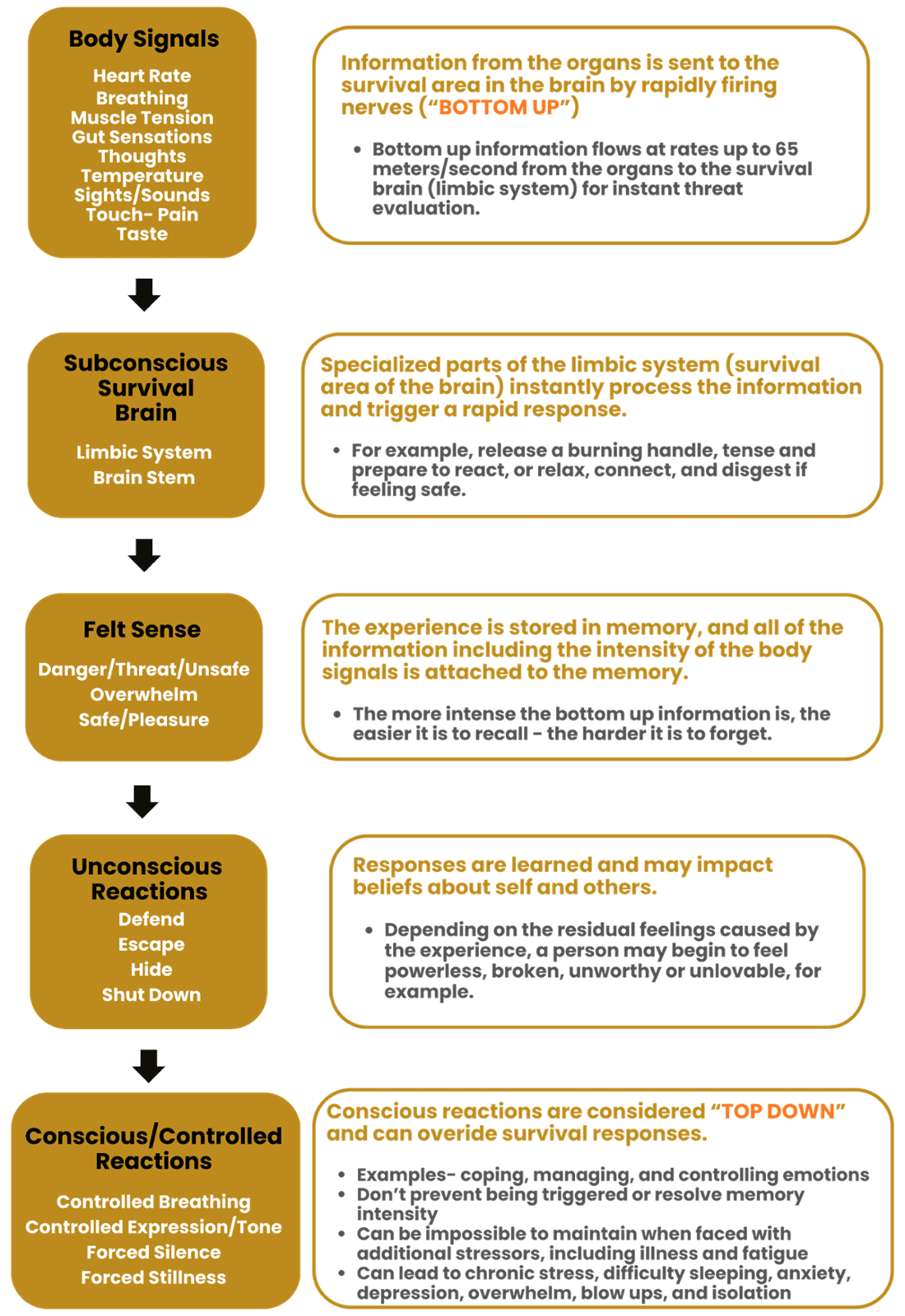
Research shows that anxiety, depression, PTSD and other emotional imbalances are associated with a complex interplay of neuroplasticity, deeply ingrained beliefs about self-worth, and the ability to form safe relationship bonds.
What Makes LAIR Different from What You've Already Tried
Many families come to us after years of therapy, EMDR, mindfulness practices, and behavioral interventions. Those approaches can be valuable—and some are incorporated into LAIR. But they share a common limitation: they depend on you being able to stay present and engaged.
When family members dissociate, shut down, or can't access buried memories driving their reactions, those tools reach their limits. LAIR is designed to work through dissociation and without needing conscious memory recall—so progress doesn't stall when you can't articulate what's wrong or stay emotionally present.
Basic bottom‑up practices like breathwork, yoga, and mindfulness can offer a helpful reset in the moment, but their effects don't last and require constant repetition to maintain. LAIR combines the best evidence-based bottom-up techniques, standardizes them, and expands on them to reach the root of emotional dysregulation, creating lasting change that doesn't require daily maintenance for any family member.
Why This Kind of Learning Sticks

Embodied Learning Holds
When your nervous system learns through direct, body-based experience (rather than being told what to think or do), the changes don't require constant reinforcement.
Your brain fortifies connections that support balance naturally—so parents aren't managing everyone's emotions six months from now, and youth aren't dependent on external support to feel safe.
The Science: LAIR leverages neuroplasticity—the brain's ability to form new cell-to-cell connections through learning. Somatic and interoceptive experiences naturally increase neuroplasticity, measurable through blood proteins like BDNF, GDNF, and NGF. These factors support memory, learning, and the growth and function of healthy brain cells—translating to faster, more sustainable functional gains for all ages.
What if your memories are buried, and you can't recall them?

No problem.
Many family members—parents and children alike—carry wounds they can't articulate. Experiences that shaped your sense of safety, worthiness, and trust long before you had words for them. These buried memories don't just sit quietly in the background. They drive how you interpret relationships, react to stress, and see yourself.
Talk-based therapy depends on being able to recall and process those memories consciously. But when the memories are pre-verbal, dissociated, or too overwhelming to access, progress stalls—and family members stay stuck in patterns no one can explain.
LAIR works through the body, not through storytelling. It helps your nervous system release the unfinished stress responses and update the old threat signals—even when you can't remember or name what hurt you. The healing happens at the level of felt experience, which is where those wounds were created in the first place.
Hidden wounds that can't be consciously recalled impact self-worth, drive choices that trap people in cycles of broken relationships and missed opportunities, and fuel fear of rejection, shame, guilt, or unworthiness. Because they can't be directly accessed through conversation, they often remain unaddressed in traditional therapy—creating intergenerational patterns that repeat until the nervous system itself is given tools to update.
When the Blocks Run Deeper
For some family members, resistance isn't just behavioral, it's neurological. When you're stuck in severe depression, paralyzing anxiety, or treatment-resistant patterns that haven't responded to anything else, we may suggest consulting with a licensed ketamine prescriber.
Ketamine, used off-label in carefully monitored therapeutic settings, can help open windows that have stayed closed for years. When paired with LAIR, it allows your nervous system to process and release what it couldn't access before, often creating breakthroughs that haven't been possible even after months of traditional therapy.
We don't lean on medication. But when families have been fighting the same battle for years and nothing is moving, we believe in using every evidence-based tool available to give everyone—parents and youth—a path forward.


What A Session is Like

LAIR sessions are conducted via encrypted video, in a private, quiet space of your choice.
Your practitioner will guide you through gentle, body-based exercises—breathwork, interoceptive awareness, and movements that support emotional recalibration and attachment reset. The process helps your nervous system identify where old stress and survival responses are stuck and how to release them at your own pace.
There's no forcing or re-traumatization. The technique works by uncoupling the intensity of emotions and sensations from memories, so you don't have to talk through every detail of what happened. Traumatic memories aren't even approached until you've gotten comfortable with the method. The focus is simply on guided support while your system does the recalibrating work it's been trying to do all along.